2026 OLED Gaming Monitor Rankings - 240Hz vs 480Hz Which to Buy
ASUS ROG Swift PG27UCDM (4K 240Hz QD-OLED) ranks #1. Compare 480Hz high refresh rate monitors and 4K resolution monitors by response time, image quality, and price.
2026 OLED Gaming Monitor Ranking: 240Hz vs 480Hz, Which One Should You Buy?
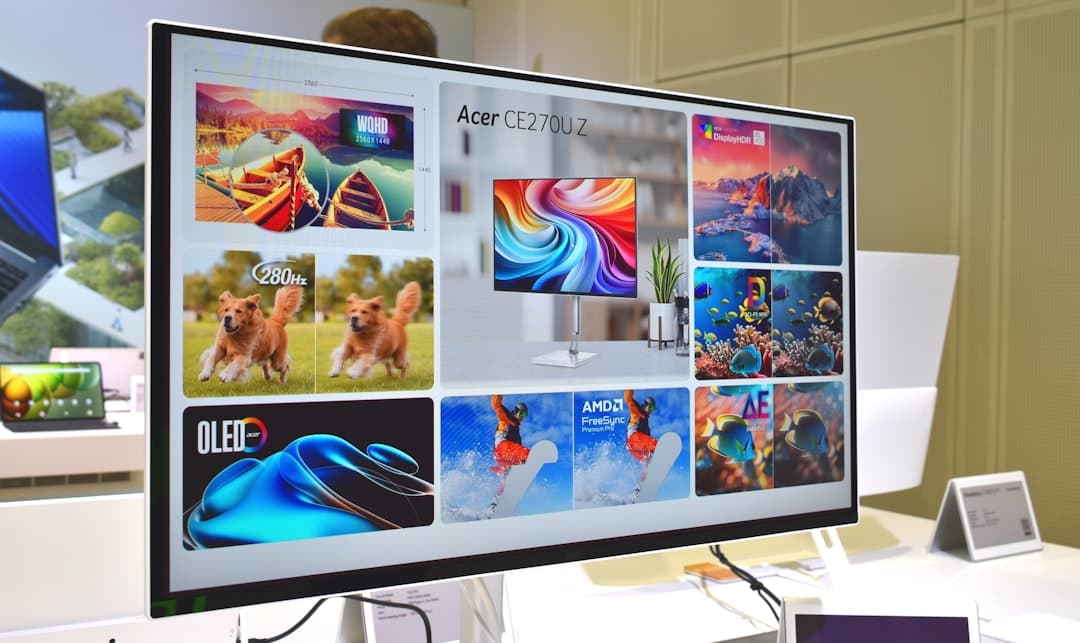
In 2026, the gaming monitor market has been completely transformed by OLED technology. OLED monitors, with their exceptional image quality, overwhelming contrast ratio, and fast response times, provide the best experience for all genres, from FPS games to single-player games. In particular, high-refresh-rate OLED monitors maximize game performance and increase immersion. Today, we’ll rank the most popular OLED gaming monitors currently on the market, discuss the differences between 240Hz and 480Hz refresh rates, and together figure out which product is right for you.
1st Place: ASUS ROG Swift OLED PG27UCDM (4K 240Hz QD-OLED)
Evaluated as offering the most balanced performance, the ASUS ROG Swift OLED PG27UCDM features a 27-inch panel with a 4K resolution and a 240Hz refresh rate, equipped with a QD-OLED panel. QD-OLED combines the advantages of existing OLED panels, such as excellent contrast ratio and wide viewing angles, with quantum dot technology to provide richer and more vivid colors. The response time is extremely fast at 0.1ms (GTG), and HDR support has exceptional image quality.
[IMAGE: ASUS ROG Swift PG27UCDM | https://rog.asus.com/monitors/27-to-31-5-inches/rog-swift-oled-pg27ucdm/]
- Pros: Exceptional image quality (QD-OLED), clarity of 4K resolution, smooth screen transitions with a 240Hz refresh rate, fast response time, stylish design.
- Cons: Relatively high price, lower refresh rate compared to 480Hz models.
- Specs: 27 inches, 3840x2160, 240Hz, 0.1ms (GTG), QD-OLED, HDR
- Price: Approximately 1,800,000 ~ 2,200,000 KRW
2nd Place: ASUS ROG Swift PG32UCDM3 (4K 240Hz QD-OLED)
Like the PG27UCDM, this is a 32-inch model using a QD-OLED panel. It’s suitable for gamers who want a more immersive gaming experience on a larger screen. However, the price has also increased proportionally to the increased screen size.
[IMAGE: ASUS ROG Swift PG32UCDM3 | https://rog.asus.com/monitors/32-inches/rog-swift-oled-pg32ucdm3/]
- Pros: Immersive depth with a wide screen, exceptional image quality (QD-OLED), 240Hz refresh rate.
- Cons: High price, possible slight input lag compared to the PG27UCDM.
- Specs: 32 inches, 3840x2160, 240Hz, 0.1ms (GTG), QD-OLED, HDR
- Price: Approximately 2,100,000 ~ 2,500,000 KRW
3rd Place: LG 32GX870B (32-inch 4K 240Hz Tandem W-OLED)
The LG 32GX870B, using Tandem W-OLED technology, is a model that uses two layers of OLED panels to improve brightness and lifespan. It particularly supports 4K 240Hz refresh rate and 1080p 480Hz refresh rate through Dual Mode, providing optimal performance in various environments.
[IMAGE: LG 32GX870B | https://www.lg.com/kr/monitors/lg-32gx870b-b]
- Pros: Supports 4K 240Hz and 1080p 480Hz Dual Mode, exceptional image quality (Tandem W-OLED), relatively reasonable price.
- Cons: Color expression may be somewhat lacking compared to QD-OLED, the large 32-inch screen size may pose space constraints.
- Specs: 32 inches, 3840x2160, 240Hz (4K), 480Hz (1080p Dual Mode), 0.1ms, Tandem W-OLED, HDR
- Price: Approximately 1,500,000 ~ 1,800,000 KRW
4th Place: ASUS PG27AQDP (27-inch 480Hz OLED)
If you are pursuing the ultimate response time and high refresh rate, you might consider the ASUS PG27AQDP. This monitor, with a 27-inch 1440p resolution and a 480Hz refresh rate, is very advantageous for fast FPS games. However, 1440p may be somewhat disappointing compared to 4K resolution.
[IMAGE: ASUS PG27AQDP | https://rog.asus.com/monitors/27-to-31-5-inches/rog-swift-pg27aqdp/]
- Pros: Extremely fast screen transitions with a 480Hz refresh rate, fast response time, exceptional image quality (OLED).
- Cons: 1440p resolution, high price, the screen may appear slightly blurred when using 480Hz.
- Specs: 27 inches, 2560x1440, 480Hz, 0.1ms, OLED, HDR
- Price: Approximately 1,900,000 ~ 2,300,000 KRW
240Hz vs 480Hz: Which One Should You Choose?
- 240Hz: Suitable for most gamers. It provides smooth screen transitions and most games can fully utilize a 240Hz refresh rate.
- 480Hz: Suitable for hardcore gamers who enjoy FPS games. You can increase competitiveness with even faster screen transitions, but to properly utilize 480Hz, a high-end PC is required, and there is a disadvantage that the screen may appear slightly blurred.
Conclusion
In 2026, the OLED gaming monitor market is centered around the ASUS ROG Swift series and LG’s Tandem W-OLED technology. Which product you choose depends on your personal preferences and budget. If you want 4K resolution and balanced performance, we recommend the ASUS ROG Swift OLED PG27UCDM. If you want an immersive gaming experience on a wide screen, we recommend the ASUS ROG Swift OLED PG32UCDM3. If you're pursuing the ultimate response time and high refresh rate, you might consider the ASUS PG27AQDP.