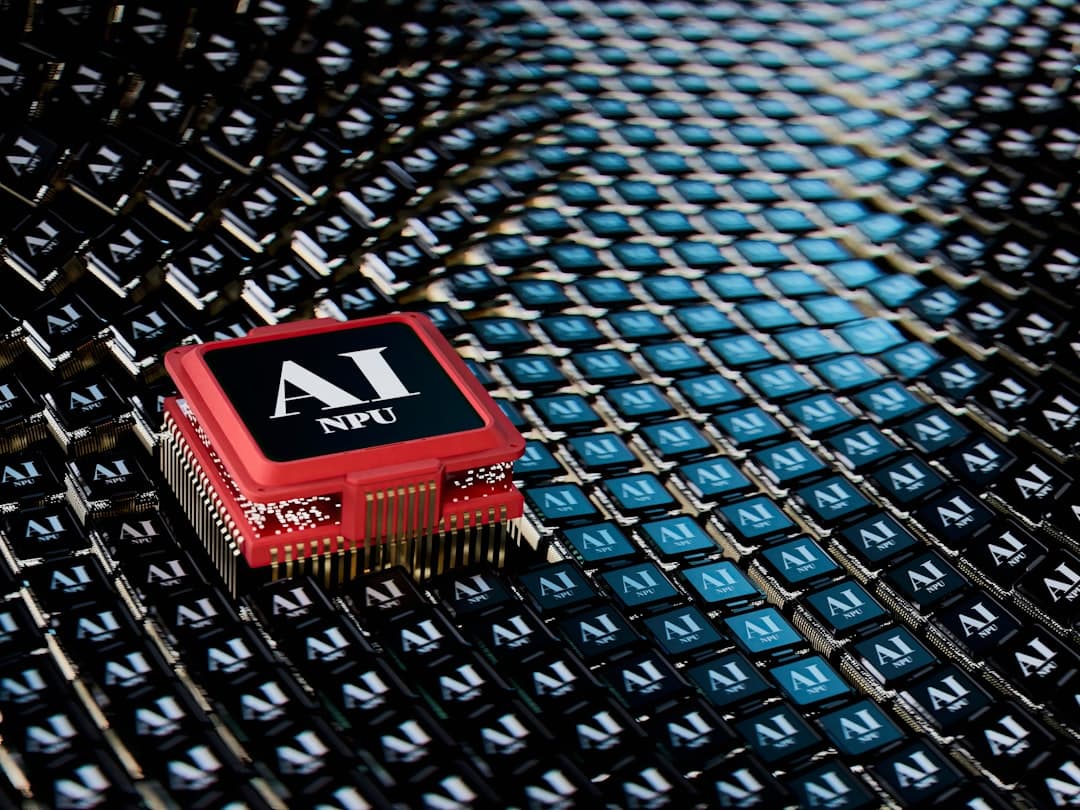
2026 AI Cryptocurrency Project Rankings - Bittensor to Fetch.AI
AI and crypto are converging fast. Bittensor leads with decentralized machine learning, Fetch.AI builds agent economies, and VC money is flooding in. Here's where the 40% of crypto VC investment is actually going in 2026.

The Cambrian Explosion of AI and Crypto: Where to Invest in 2026
The convergence of artificial intelligence and cryptocurrency is no longer a distant possibility; it's an unfolding reality. We’re witnessing a Cambrian explosion of projects attempting to fuse these two transformative technologies, and the potential impact is staggering. AI, starved of decentralized computing power and vast, unbiased datasets, finds a natural ally in blockchain. Conversely, cryptocurrency, often grappling with inefficient processes and reactive strategies, desperately needs intelligent automation to unlock its full potential. This symbiotic relationship is attracting unprecedented attention, and a lot of money.
This isn't just hype. The underlying logic is compelling. Think about AI needing training data - blockchain can incentivize data contribution and ensure provenance. Consider DeFi needing to be more responsive to market shifts – AI agents could optimize trading strategies and automate liquidity provision. The interaction is creating entirely new possibilities for both fields, and separating the signal from the noise in this booming sector is important. So, let’s look at some of the key projects vying for dominance in this brave new world.
Bittensor (TAO): Building the Decentralized Brain of the Future
[IMAGE: Bittensor | https://www.bittensor.io/]
Bittensor has arguably taken the lead in establishing itself as foundational infrastructure for decentralized AI. Its core concept revolves around a decentralized machine learning network incentivized by blockchain. Users contribute computational power and AI models to the network, and are rewarded with TAO tokens based on the utility of their contributions. This "Proof of Intelligence" (PoI) – also known as Yuma Consensus – is a radical departure from traditional blockchain consensus mechanisms, rewarding not just computational power but intelligence itself. The impending halving of TAO, scheduled for December 2025, represents a significant supply-side event. Reduced token issuance will likely drive scarcity and potentially substantial price appreciation, with current projections suggesting a price range of $450 to $850 by 2026.
What’s really exciting about Bittensor are the "subnets" – essentially specialized AI modules that can be built and deployed on top of the Bittensor network. Imagine entire AI applications running in a decentralized, incentivized ecosystem. This architecture allows for a modular and scalable approach, building innovation across various AI domains. The project's emphasis on creating a truly decentralized AI infrastructure positions it uniquely within the space.
Fetch.AI: Orchestrating Decentralized Agents within a Broader Alliance
[IMAGE: Fetch.AI | https://fetch.ai/]
Fetch.AI isn't operating in a vacuum. Its strength lies in its participation in the Artificial Superintelligence Alliance (ASI) alongside SingularityNET and Ocean Protocol. This collaboration, aimed at creating a decentralized, coordinated AI ecosystem, represents a significant move toward a more holistic vision of the future. Fetch.AI’s 2026 roadmap focuses on the ASI Chain & Ecosystem Integration, which will fundamentally allow AI agents from different projects to seamlessly communicate and collaborate. The potential is huge – imagine AI agents optimizing logistics across multiple supply chains or coordinating energy grids powered by decentralized renewable sources.
While Bittensor leans heavily into infrastructure, Fetch.AI focuses on the agents – autonomous software entities capable of performing tasks and interacting with the world. Price projections for FET are more conservative than TAO's, with a potential high of around $0.95 in 2026, but the value of being part of the ASI Alliance shouldn't be underestimated. It’s a calculated bet on a larger, interconnected AI future.
The Supporting Cast: Ocean Protocol, Ritual, Grass & More
[IMAGE: Ocean Protocol | https://www.oceanprotocol.com/]
Ocean Protocol deserves recognition as a critical piece of the puzzle. Its core function is providing a decentralized data marketplace – the lifeblood of any AI system. AI thrives on data, and Ocean Protocol allows individuals and organizations to monetize their datasets while maintaining control and privacy. This creates a virtuous cycle, incentivizing data contribution and fueling AI development.
Then there are projects like Ritual and Grass. Ritual focuses on building agent-to-agent commerce protocols, enabling AI agents to autonomously negotiate and transact. Grass, on the other hand, leverages the idle bandwidth of users' devices to create a decentralized computation network, effectively providing the distributed computing power AI requires. These projects, while smaller, are tackling important aspects of the AI-crypto ecosystem.
SingularityNET, also part of the ASI Alliance, plays a different role by offering a decentralized marketplace for AI services. It's more of a platform than a foundational infrastructure project, but its contribution to the overall ecosystem is undeniable. The sheer variety within this space is impressive.
The VC Investment Tidal Wave: AI+Crypto is Where the Money Flows
The influx of venture capital into AI and cryptocurrency is a clear indicator of the sector’s burgeoning potential. Just a few years ago, AI+crypto projects represented a tiny sliver of crypto VC funding, around 18% in 2024. Now, that number has exploded to a staggering 40%. Total VC investment in 2025 reached $7.9 billion, a 44% increase from the previous year. The number of AI deals has also witnessed remarkable growth, from over 30 in 2023 to 40+ in 2024, and now estimated at approximately 70 in 2025, accompanied by a substantial $2.0 billion in funding.
This isn’t just about speculative hype; the use cases being funded are increasingly practical. Predictive trading algorithms are leveraging AI to analyze market trends and execute trades automatically. Decentralized AI inference is bringing the power of AI closer to the edge, reducing latency and improving privacy. Automated DeFi strategies are using AI to optimize yield farming and liquidity provision. This robust investment is acting as rocket fuel for innovation, propelling the AI-crypto convergence forward at an astonishing pace.
Coinbase, Solana, and Polygon: Mainstream Integration
Interestingly, the trend extends beyond purely crypto-native AI projects. Major players like Coinbase, Solana, and Polygon are actively integrating AI inference capabilities into their platforms. Coinbase is exploring AI-powered tools for fraud detection and personalized trading recommendations. Solana is leveraging AI to improve network efficiency and security. Polygon is working on solutions that allow developers to easily deploy AI models on its blockchain. This mainstream adoption is a critical step towards wider accessibility and usability.
Navigating the space: Investor Insights
The AI-crypto space is undeniably complex and rapidly evolving. Trying to definitively rank projects in a hierarchical structure feels increasingly limiting, as their roles and contributions often overlap. However, considering overall impact and foundational importance, Bittensor currently holds a strong position as a potential S-tier asset. It’s laying the groundwork for a truly decentralized AI infrastructure, and the halving event adds a layer of scarcity that could drive significant price appreciation.
Fetch.AI, with its involvement in the ASI Alliance, represents a compelling A-tier investment. While the projected price appreciation may be more modest than Bittensor’s, the long-term vision of a coordinated AI ecosystem is incredibly promising. Ocean Protocol, Ritual, Grass, and SingularityNET each contribute valuable pieces to the puzzle, and deserve consideration as B-tier opportunities. Smaller, newer projects (the C-tier) are undoubtedly interesting, but carry significantly higher risk.
Anyway, what's important for investors isn't just about chasing the highest potential returns. It's about understanding the underlying technologies and the teams behind them. Decentralized AI is still in its infancy, and the challenges are significant – from scaling consensus mechanisms to ensuring data quality and model transparency. But the potential rewards are equally immense, promising to reshape industries and redefine the future of intelligence.
The interesting thing to consider isn’t just which projects will succeed, but how their interactions will shape the overall space. Will the ASI Alliance become the dominant force in decentralized AI? Or will Bittensor’s decentralized infrastructure prove to be more adaptable and innovative? Perhaps a hybrid model will emerge, where different projects collaborate and specialize, creating a truly interconnected ecosystem.
But, honestly, I'm most intrigued by the implications for data ownership. As AI becomes increasingly reliant on data, the value of personal information will only continue to rise. Ocean Protocol’s approach of allowing individuals to monetize their data – while retaining control – could be a game-changer, fundamentally altering the power dynamics of the digital economy. And that’s a story that's just beginning to unfold.
Disclaimer: This article is for informational purposes only and does not constitute investment advice. Investment decisions should be made based on your own judgment and responsibility.