Qualcomm Snapdragon 8 Elite Gen 2 vs Apple A19 Pro - On-Device AI Battle
Flagship chips from Qualcomm and Apple battle for on-device AI supremacy. 60%+ of AI inference moves local by end 2026 - benchmarks, TOPS ratings, and real-world performance.
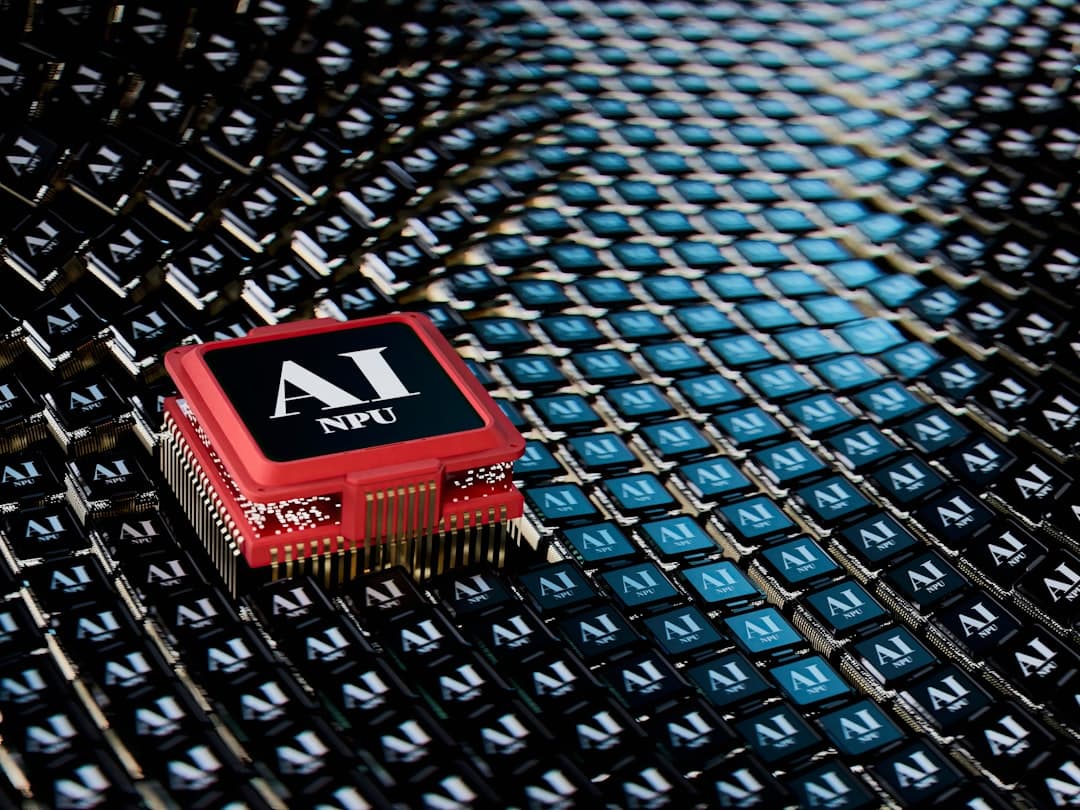
The Snapdragon 8 Elite Gen 5 vs. Apple A19 Pro: A Deep Dive into the On-Device AI Showdown
The mobile processor space is constantly shifting. For a while, the narrative largely centered on raw CPU and GPU power. Now, with the rise of generative AI, the Neural Processing Unit, or NPU, has become a critical battleground. Qualcomm’s latest flagship, the Snapdragon 8 Elite Gen 5 (previously referred to as Gen 2), and Apple’s A19 Pro, powering the iPhone 16, are at the forefront of this on-device AI revolution. It’s not just about theoretical numbers; it's about what these chips can do for users, and how seamlessly they do it.
Let's start with the fundamentals. The A19 Pro demonstrably holds the edge in traditional CPU performance, at least according to benchmark data. It’s roughly 28% faster in single-core tasks and a respectable 5% quicker in multi-core scenarios, despite sporting a 6-core configuration against the Snapdragon 8 Elite Gen 5’s 8 cores. Apple's chip pulled a whopping 3,500 points in Geekbench single-core tests, consistently outperforming many competing processors. The Snapdragon, in Tom's Guide’s evaluations, managed 3,832 for single-core and 12,208 for multi-core. This paints a picture of the A19 Pro being the quicker of the two for common tasks, but it isn't the full story.
What's really interesting is how this translates to real-world gaming. The Snapdragon 8 Elite Gen 5, despite the CPU difference, has proven remarkably capable. Testing reveals it managed a stable 120 frames per second in demanding games like Genshin Impact and Zenless Zone Zero, consistently beating what iPhones running the A19 Pro could achieve. This illustrates that architectural choices and optimized software can sometimes outweigh pure core count and clock speed advantages. It’s a fascinating nuance.
But the real differentiating factor lies in the NPU.
The shift to on-device AI is arguably more significant than ever before. Why? Latency. Cloud-based AI, while powerful, introduces a noticeable delay – anywhere from 200 to 500 milliseconds per token. Compare that to on-device AI, which has a latency of less than 20 milliseconds per token. That’s a game-changer for interactive experiences like real-time translation or AI-powered photography. Qualcomm has been keenly aware of this, and the Snapdragon 8 Elite Gen 5 demonstrates a clear push in this direction with a 37% performance bump in NPU capabilities. Image generation, a significant use case, comes in under a second, and it can process a surprisingly swift 220 tokens per second.
Apple's Neural Engine in the A19 Pro also throws its hat in the ring. It has impressive raw AI performance, registering 48 TOPS (trillions of operations per second). The focus isn't just on raw power, though. Apple’s implementation leans heavily into advanced photography capabilities, live translation, and increasingly, the integration of on-device Large Language Models (LLMs). While both companies are fiercely protective of specific LLM details, the fact that they're being deployed locally is indicative of the broader trend.
It’s easy to get caught up in the TOPS numbers, but it’s important to remember the context. Mobile NPUs operate with significantly less memory bandwidth than their data center counterparts – typically between 50 and 90 GB/s, compared to the 2-3 TB/s seen in server-grade GPUs. That’s a 30 to 50 times gap, a fundamental limitation that shapes the design and capabilities of mobile AI chips. Qualcomm acknowledges this in their research, highlighting that achieving meaningful on-device AI requires smart optimization and architectural innovations, not just brute force processing power.
Looking ahead, the evolution is only going to accelerate. The anticipated Snapdragon 8 Gen 4 is slated to feature a Hexagon NPU rated at a staggering 75 TOPS – a substantial leap from the 45 TOPS of its predecessor. The industry forecast suggests that by the end of 2026, over 60% of AI inference on flagship Android devices will be handled on-device. This isn't just a trend; it’s becoming the expectation.
Then there’s the AMD collaboration. Qualcomm’s partnership with AMD to integrate their "Gorgon" and "Medusa" architectures holds immense promise. Gorgon, expected in early 2026, and Medusa, arriving around early 2027, are touted to deliver a tenfold performance increase in on-device AI compared to 2024's offerings. That’s a massive jump, and it could fundamentally reshape the mobile AI space. Honestly, it’s difficult to fully grasp the implications – it suggests a future where AI capabilities on smartphones rival those currently found in laptops and even some desktops.
But what does all of this mean for the average user? Beyond the impressive benchmark numbers and technological jargon, it boils down to tangible improvements in everyday experiences. Imagine your phone instantly translating a conversation in real-time, without any noticeable lag. Picture your camera anticipating your needs, intelligently adjusting settings to capture the perfect shot. Think of AI-powered assistants that truly understand your intent and respond instantaneously.
The current generation represents a significant step forward. The A19 Pro shines with its performance, particularly where optimization and ecosystem integration are key. But the Snapdragon 8 Elite Gen 5 demonstrates remarkable efficiency and gaming prowess. The race isn't about who has the highest TOPS; it’s about who can best leverage those capabilities to deliver a genuinely superior user experience. Apple focuses on seamless integration and polished software, whereas Qualcomm seems to be geared towards pushing the boundaries of raw performance and flexibility.
Thinking about this all, it feels like we’re only scratching the surface. The memory bandwidth limitation, while significant now, will undoubtedly be addressed through future architectural improvements. The emergence of AMD’s Gorgon and Medusa architectures suggests a future where on-device AI is not just a feature, but a core defining characteristic of mobile devices. And, to be honest, the potential for what’s coming next is genuinely exciting.