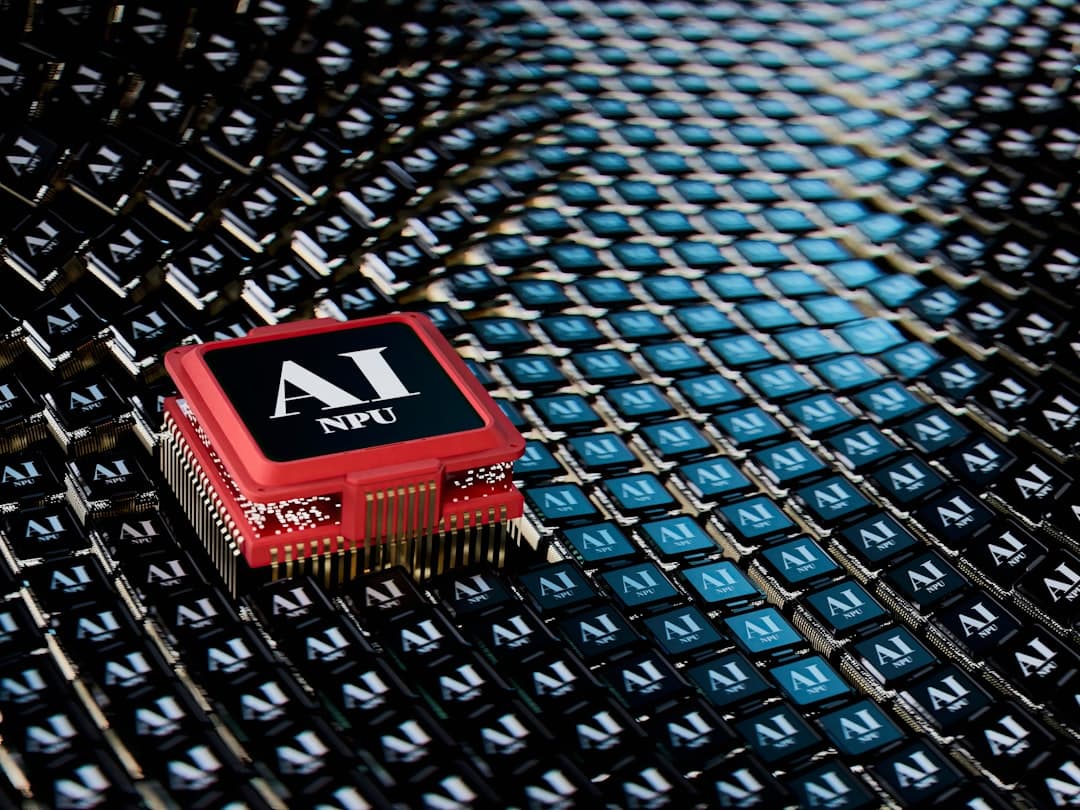
2026 AI Breakthrough Ranking - Agentic AI vs Quantum-AI vs Generative Coding
Ranking the most impactful AI breakthroughs of 2026 from S to C tier. Compare Agentic AI, Quantum-AI hybrids, and Generative Coding by real-world impact.

2026 AI Technology Breakthrough Tier Ranking: Agentic AI vs Quantum-AI vs Generative Coding
Hello, everyone interested in technology trends! From the end of 2023 to early 2024, artificial intelligence technology is developing at an incredible speed. It’s fascinating to glimpse the future. Especially, you might be curious about which technologies will bring revolutionary changes to our lives and businesses in 2026. Today, based on experts’ predictions, we will rank AI technologies in 2026 into Agentic AI, Quantum-AI, and Generative Coding tiers, and deeply analyze the potential and limitations of each technology. Are you ready?
S Tier: Agentic AI – The Designer of the Autonomous Future
(The most influential technology)
Until now, AI development has mainly focused on improving model performance, that is, creating smarter assistants. However, in 2026, this trend will shift drastically. This is due to the rise of Agentic AI. Agentic AI means AI systems that go beyond simply executing commands, planning and judging for themselves, and using various tools to solve complex problems. Like humans, they are designed to make decisions based on the situation, delegate necessary tasks, and operate flexibly in various environments.
Experts predict that Agentic AI will evolve from a ‘tool’ level to an ‘organized system.’ That is, it will contribute both to automating business processes, accelerating research and development, and even creating new business models. According to IBM’s research, Agentic AI is likely to be a key driver for innovative change across technology.
The greatest strength of Agentic AI is its ‘autonomy.’ The ability to set and achieve goals with minimal human intervention is highly effective for maximizing productivity, reducing costs, and creating new opportunities. However, this autonomy also requires in-depth discussions about ethical and social responsibility. Efforts are necessary to ensure transparency in AI decision-making processes, address bias issues, and prevent unforeseen side effects.
C Tier: Generative Coding – High Potential, But Still Limited
(Technology falling short of expectations)
A few years ago, Generative Coding amazed the world by generating text, images, code, and analytical results at an unprecedented speed and scale. It certainly showed innovative possibilities, but in 2026, it is expected to relatively lose interest compared to the rapid development of Agentic AI.
The core limitation of Generative Coding is a lack of ‘creativity’ and ‘problem-solving ability.’ It specializes in generating new content based on existing data, but struggles to solve complex problems or create completely new ideas. Also, the quality and reliability of the generated content often require human validation.
Of course, this doesn't mean that Generative Coding will disappear completely. It can still be used as a useful tool in specific fields, such as simple code generation, content creation, or design draft work. However, in 2026, compared to the powerful autonomy and problem-solving capabilities of Agentic AI, Generative Coding’s role will be relatively limited. Generative Coding is constantly evolving and may offer even more powerful functions in the future, but currently, it is considered less competitive than Agentic AI.
B Tier: Quantum-AI – Still in Early Stages, But with the Potential to Change the Future
(Technology with the potential to change the future)
Quantum computing is still in its early stages, but it has the potential to significantly impact the field of artificial intelligence in 2026. Quantum-AI aims to develop new algorithms and systems that surpass the limitations of existing AI models by leveraging the powerful computational capabilities of quantum computing. It is expected to achieve innovative results in areas such as complex optimization problem solving, new drug development, and financial modeling.
However, there are still many hurdles to overcome before quantum computing becomes commercialized. It requires enormous costs and technological capabilities to build and maintain quantum computers, and developing quantum algorithms is also very difficult. Also, the performance of quantum computers is still limited compared to conventional computers.
According to Forbes, in 2026, quantum computing technology may show performance that surpasses existing AI models in certain areas, but more time will be needed for it to be widely utilized. Quantum computing is a technology with the potential to change the future, but it is still in its early stages and has many challenges to overcome before it is commercialized.
Conclusion:
Please remember that in the 2026 AI technology ranking, Agentic AI will dominate and be the center of technological innovation. Generative Coding may be useful in specific fields, but it will struggle to escape the shadow of Agentic AI, and Quantum-AI has the potential to change the future, but it remains in its early stages. Predicting the future is not easy, but it is important to keep an eye on constantly changing technology trends and maintain a posture of learning new technologies.