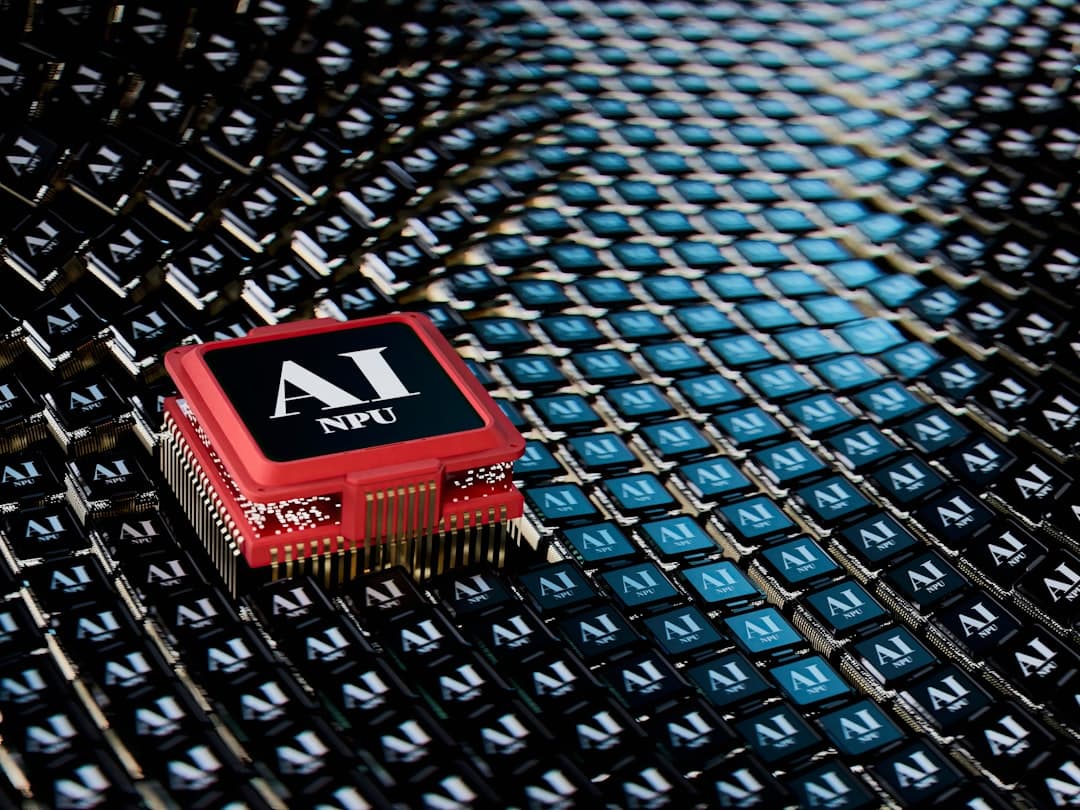
2026 AI Semiconductor Market Outlook - Nvidia vs AMD Competition Analysis
Analyzing key trends in the 2026 AI semiconductor market and the competitive landscape between Nvidia and AMD. Exploring hyperscale data centers, quantum-AI hybrid computing, physical AI, and major technological innovations.
2026 AI Semiconductor Market Outlook - Analysis of the Nvidia vs. AMD Competition
Hello, I’m a data analyst. The pace of advancement in artificial intelligence technology has been astounding in recent years. And at the heart of this innovation lies semiconductors, particularly AI semiconductors. What will the AI semiconductor market look like in 2026? I will thoroughly analyze the expected changes within the intense competition between Nvidia and AMD, and what the key trends in this market are.
Key Trends Dominating the AI Semiconductor Market in 2026
2026 will be a year of significant change both in how AI is utilized, and consequently, the demand for semiconductors. Let's take a look at a few key trends.
1. Explosive Growth of Hyperscale AI Data Centers:
Even the most advanced AI models must learn from data. And that massive data is processed and learning is enabled by huge data centers. According to Deloitte's forecast, the power demand for AI data centers in the US will increase from 4 gigawatts in 2024 to a staggering 123 gigawatts by 2035. This is more than a 30-fold increase, which will have a tremendous impact on the demand for AI semiconductors. Data centers will require more computing power, lower latency, and higher energy efficiency, which will provide new challenges and opportunities for semiconductor companies.
2. The Rise of Quantum-AI Hybrid Computing:
Quantum computing is still in its early stages, but it has the potential to solve problems that cannot be solved with existing computing methods in certain fields. There is a high probability that a hybrid computing environment combining quantum computing and existing AI computing will emerge in 2026. This will allow for the construction of more efficient AI systems by utilizing quantum computers for specific computational tasks and using existing AI semiconductors for the remaining tasks.
3. Fusion with Physical AI/Robots:
AI is no longer just a simple software. It is being combined with robots in various fields such as manufacturing, logistics, and healthcare to participate in physical tasks. These physical AI/robots will need to process data and make decisions in real-time, which will further increase the demand for high-performance, low-power AI semiconductors.
4. Utilizing AI for Scientific Discovery:
AI is leading innovation in scientific research fields such as new drug development, climate modeling, and space exploration. AI's ability to analyze complex data and discover patterns will help scientists discover new knowledge and solve problems. This use of AI for scientific discovery will promote the development of new types of AI semiconductors.
5. Shift Towards Efficiency:
While performance was the priority in the early AI market, concerns about power consumption and the increasing size of data centers have made efficiency an important factor. In 2026, the demand for AI semiconductors that can deliver more computing power using less power will increase further. Various technical innovations to improve energy efficiency are expected.
Nvidia vs. AMD: In-Depth Analysis of the Intense Competition
Now, let's take a closer look at the competition between Nvidia and AMD, which will lead the AI semiconductor market in 2026. Both companies hold an important position in the AI market, but they have different strengths, weaknesses, and strategic directions.
Nvidia: Dominant Market Share and Unique Ecosystem
Nvidia currently leads the AI semiconductor market by a significant margin. GPUs from Nvidia are practically the standard for training and operating large language models (LLMs) like GPT. This market dominance stems from a strong software ecosystem and long experience with GPU-accelerated computing. Nvidia supports developers to easily utilize GPUs through its proprietary development platform, CUDA, which is one of the reasons for using Nvidia's products.
However, Nvidia's high-price policy is causing increased competition. Also, high-performance GPUs consume a significant amount of power, which acts as a factor increasing data center operating costs.
AMD: Strength in Value and Memory Bandwidth
AMD is actively investing and innovating to increase its market share in the AI semiconductor market in response to Nvidia's monopoly. AMD's Instinct series GPUs offer a price advantage compared to Nvidia's high-end products, particularly in memory bandwidth. This is advantageous for tasks involving large-scale data processing, such as LLMs.
AMD also provides various hardware platforms combined with artificial intelligence, targeting markets such as robots, autonomous vehicles, and game consoles. According to MLQ.ai, Nvidia's market value is $4.3 trillion, while AMD's is $350 trillion, suggesting high potential for growth. AMD is working to narrow the gap with Nvidia in terms of software optimization, which will play an important role in expanding market share in the future.
Conclusion:
The AI semiconductor market in 2026 will become even more intense with AMD's challenge and competition despite Nvidia's overwhelming dominance. Nvidia will lead the market based on its unique ecosystem and technology, and AMD will expand its market share with its value and innovative technologies. To meet the demands of the market, both companies will need to constantly develop new technologies and compete.
Disclaimer: This article is for informational purposes only and does not constitute investment advice. Investment decisions should be made based on your own judgment and responsibility.