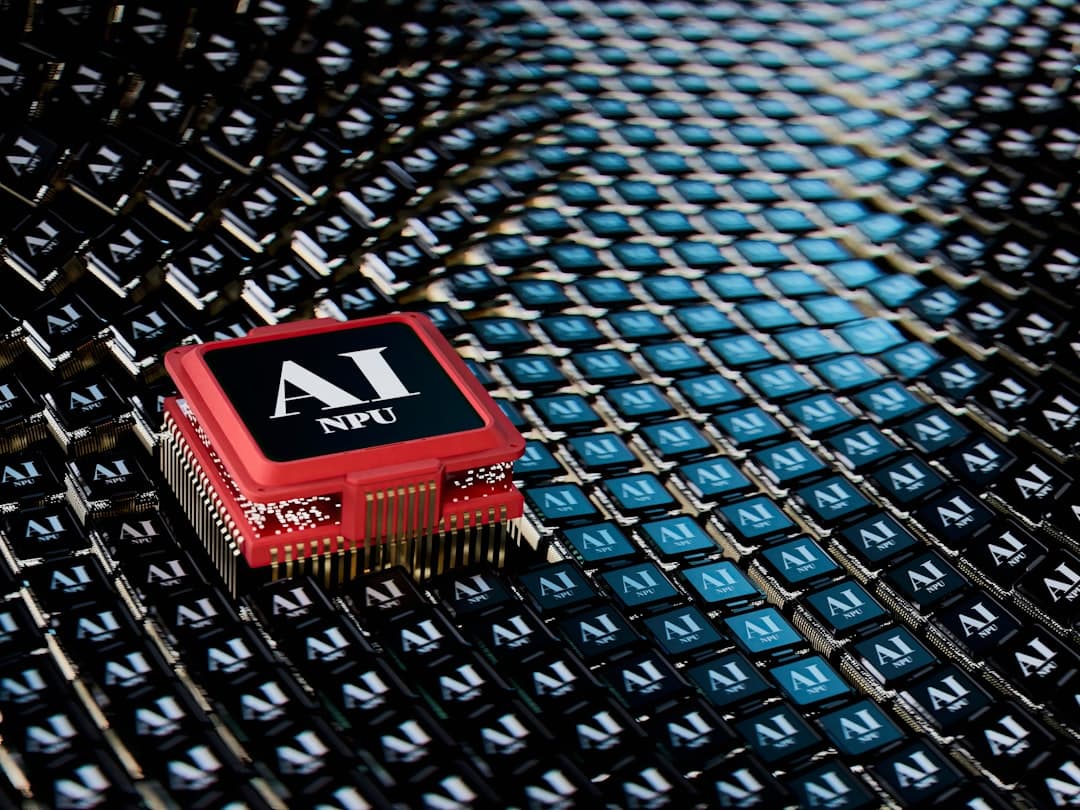
2026 Neuromorphic Chip Revolution - Brain-Inspired Semiconductors
Neuromorphic chips mimicking the human brain's neural networks are transforming the AI semiconductor market in 2026. Explore the principles and future of neuromorphic chips as core technology for Embodied AI and edge computing.

2026 Neuromorphic Chip Revolution - Mimicking the Human Brain in Semiconductors
In recent years, artificial intelligence technology has been advancing at an astonishing pace. However, existing deep learning models are revealing limitations in terms of computational power and power consumption. 'Neuromorphic Computing', a new approach to address these issues, is gaining attention. In 2026, this field will present remarkable advancements and new possibilities, bringing an innovative breeze to the semiconductor industry.
Neuromorphic computing is a computing method created by mimicking the way the brain works. The brain processes information through countless neurons and synapses, and neuromorphic chips are similarly designed to resemble this brain structure. Unlike traditional semiconductor chips, which represent information as 0s and 1s and process it sequentially, neuromorphic chips use 'Spiking Neurons', an electrical signal method of nerve cells. By applying the operating principles of the brain, it aims to maximize energy efficiency and improve real-time information processing capabilities.
The key difference lies in energy consumption. Traditional hardware like GPUs requires vast computational power, and therefore consumes a lot of electricity. In contrast, neuromorphic chips follow the brain's efficient information processing method, allowing them to perform complex calculations with significantly less energy. it leverages event-driven computing to perform calculations only when needed, further reducing power consumption. The method of memory is also important. Traditional chips have separate memory and processing units, while neuromorphic chips are designed to perform memory and computation in the same space to reduce latency caused by data movement.
2026 is considered the year when neuromorphic chips will begin to be practically applied in the real world. The potential for neuromorphic chips is opening up in various fields such as robotics, artificial intelligence, and the Internet of Things (IoT). Particularly in the robotics field, neuromorphic chips are expected to contribute to significantly improving the response speed of robots and extending battery life. This helps robots quickly recognize information about the surrounding environment and respond appropriately.
The market is also rapidly changing. Companies currently leading neuromorphic chip technology include: Intel has developed a neuromorphic chip called Loihi 3, which enables real-time data processing with significantly lower power consumption than existing GPUs. IBM is researching the workings of the brain in more depth through the NorthPole neuromorphic system, and BrainChip has unveiled the Akida 2.0 chip, paving the way for energy-efficient AI computations. Synopsys is also collaborating with Innatera to support the design and verification of next-generation neuromorphic microcontrollers. SynSense is also accelerating neuromorphic design development.
These technological advancements have the potential to bring innovation to various fields. For example, in the edge computing field, neuromorphic chips perform calculations directly at the point where data is generated, reducing the process of transmitting data to cloud servers. This contributes to increasing data processing speed, reducing network latency, and strengthening security. In the medical field, neuromorphic chips can be applied to wearable devices to monitor patients' health status in real time and utilize them for early disease diagnosis.
It is important to note that it doesn't simply replace existing AI technology, but opens up new possibilities. This technology, which mimics the brain, enables continuous learning and adaptation, making responses to changing environments faster and more accurate. Existing AI systems require retraining when faced with new situations, but neuromorphic systems have the ability to learn and adapt on their own. This helps improve the ability to deal with unpredictable situations along with more efficient energy use.
Of course, there are still challenges to be addressed. The programming method for neuromorphic chips is very different from the traditional method, so a new software development environment is needed. In addition, a deep understanding of brain science is necessary to maximize the performance of neuromorphic chips. Research and development are continuously being conducted to solve these challenges, and neuromorphic computing is expected to develop further. Research is also underway to support various memory devices and enable efficient testing.
2026 will be an important turning point for confirming the potential of neuromorphic computing and realizing its potential. Neuromorphic chips, created by mimicking the workings of the human brain, will overcome the limitations of existing semiconductor chips in terms of energy efficiency, real-time processing capabilities, and adaptability, and contribute to further developing artificial intelligence technology. It is anticipated how the neuromorphic computing technology will develop and what impact it will have on our lives.