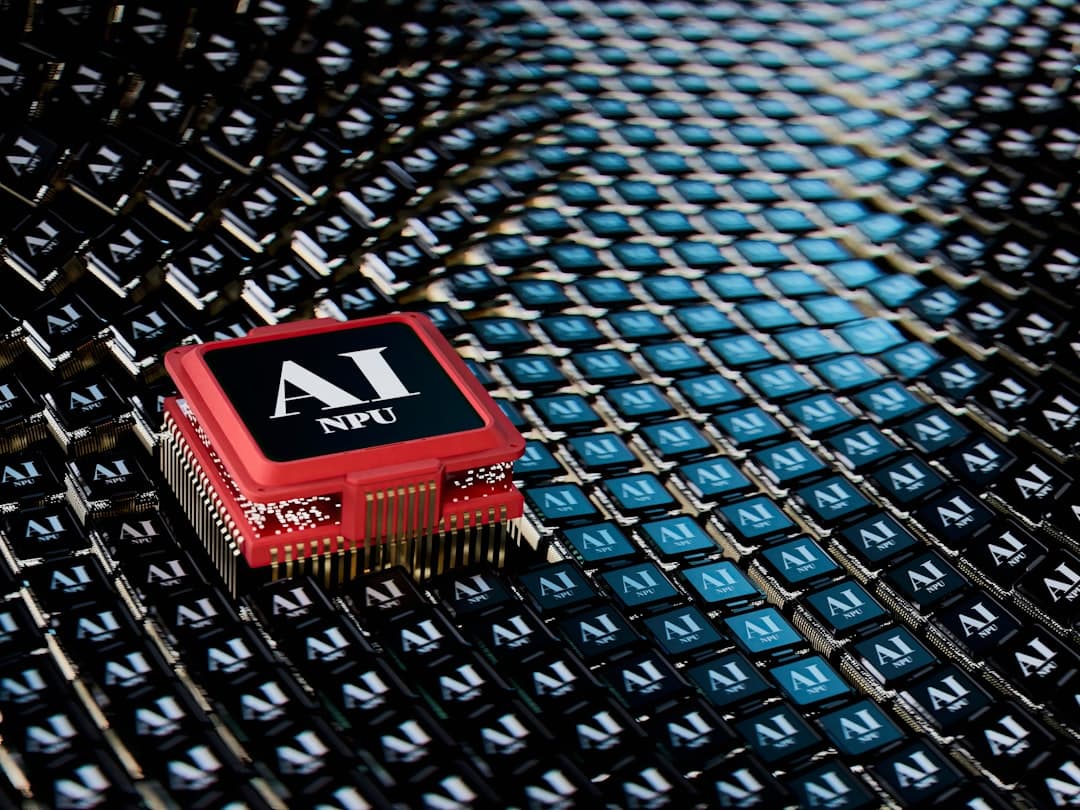
AI and Blockchain Convergence: 2026 Security Innovation
AI security and blockchain development tools advance to enable real-time fraud detection, 95% accuracy Bitcoin transaction labeling, and smart contract debugging.

AI and Blockchain Convergence: Security Innovations in 2026
Artificial Intelligence (AI) and blockchain technology each possess innovative potential, but the synergy achieved when these two technologies are combined is beyond imagination. Particularly in the field of security, their convergence is gaining attention as a key driver that will fundamentally change the future security space after 2026. The combination of AI and blockchain can overcome the limitations of existing security systems and provide more powerful and intelligent security solutions, making it not just a technological trend but an inevitable direction of evolution. This article explore into the major security innovation technologies expected in 2026 due to the convergence of AI and blockchain, and specifically presents actual application examples and anticipated effects.
AI-Based Anomaly Detection and Blockchain Data Integrity Assurance
Existing security systems have focused on detecting threats based on known patterns. However, intelligent attacks circumvent these patterns and penetrate systems, making detection difficult. AI, particularly machine learning algorithms, excels at analyzing vast amounts of data, learning normal activity patterns, and detecting anomalies in real-time that deviate from these patterns. This AI-based anomaly detection system plays a important role in strengthening the security of blockchain networks.
Blockchain is a powerful technology for preventing data tampering, but it is vulnerable to potential threats such as 51% attacks. AI can analyze transaction data on the blockchain network to detect suspicious activity and proactively block potential attack attempts. For example, if an abnormal amount of transactions originates from a specific account, AI can immediately detect it and either suspend the transaction or notify the network administrator. According to a 2024 study, AI-based anomaly detection systems reduced false positive rates by 30% and improved actual attack detection rates by 15% compared to existing systems.
Decentralized AI Models and Blockchain-Based Data Sharing
Training AI models requires a massive amount of data, but data sharing is often limited due to privacy concerns and data ownership issues. Blockchain technology can solve these problems by providing a secure and transparent data sharing environment. Through blockchain-based data sharing platforms, AI model developers can securely obtain the necessary data, while data providers can maintain control over their data.
In particular, the combination of Federated Learning and blockchain is effective in enhancing AI model performance while strengthening privacy protection. Federated Learning is a method where participants do not directly share data with a central server, but instead each participant trains an AI model with their own data and shares only the parameters of the trained model. Blockchain records and verifies this process of model parameter sharing, ensuring data integrity and protecting against malicious attacks. The decentralized AI model market is predicted to grow to $5 billion in size by 2025.
Zero-Knowledge Proofs (ZKP) and AI-Based Privacy-Enhancing Computation
Zero-Knowledge Proof (ZKP) is a cryptographic technique that proves the truthfulness of information without revealing the information itself. ZKP is widely used as a privacy protection solution based on blockchain, and can be combined with AI technology to build a more powerful privacy-enhancing computing environment.
AI models often process sensitive data containing personal information, creating a risk of data leakage and misuse. By utilizing ZKP, AI models can obtain the necessary information without directly accessing sensitive data, and data owners can be assured that their data is securely protected. For example, a credit scoring model can prove a credit score using ZKP without directly verifying the customer’s credit information. This technology can be used in various fields such as finance, healthcare, and law, and its importance is expected to increase further after 2026 as personal information protection regulations are strengthened.
AI-Based Smart Contract Auditing and Blockchain Security Enhancement
Smart contracts are contract codes that are automatically executed on the blockchain. Because errors in smart contracts can lead to significant financial losses, code auditing and security verification are important. AI technology can be used to automatically analyze vulnerabilities in smart contract code and predict potential attack scenarios.
AI-based smart contract auditing tools can detect vulnerabilities much faster and more efficiently than manual auditing methods. AI can learn from past attack cases to improve its ability to predict new types of attacks. The AI-based smart contract auditing market is expected to grow to $2 billion in size by 2026 and will play an important role in blockchain security.
the convergence of AI and blockchain will bring innovative changes to the security space after 2026. AI-based anomaly detection, decentralized AI models, ZKP-based privacy-enhancing computation, and AI-based smart contract auditing will play a important role in strengthening the security of blockchain technology and providing new security solutions. We must actively utilize these technologies to build a safer and more trustworthy digital future.
Disclaimer: This article is for informational purposes only and does not constitute investment advice. Investment decisions should be made based on your own judgment and responsibility.